Invisible Dangers: When vibrations become a risk
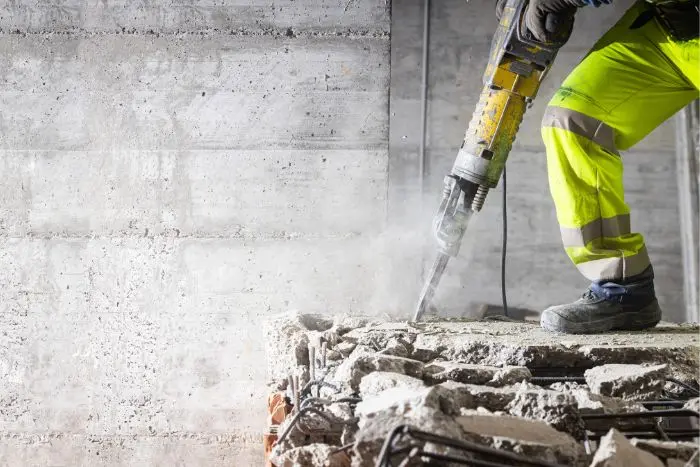
Jackhammers, grinders, drills, saws, sandblasters, compaction equipment… There are many tools on a construction site that produce vibrations. And because these vibrations are part of everyday life, their impact on health can easily go unnoticed.
However, Regular and cumulative exposure to vibrations can have significant health consequences for workers. The INSPQ estimates that in Quebec, nearly 400,000 people are exposed to hand-arm vibrations in the workplace and are at risk of developing hand-arm vibration syndrome.
Vibrations that are not all the same
There are two main types of vibrations in the workplace.
Hand-Arm Vibrations are transmitted directly to the hands and arms when using vibrating tools. They can occur, for example, during activities such as grinding, cutting, sanding, drilling, riveting, nailing, or milling.
Whole-body vibrations, on the other hand, are transmitted throughout the body, particularly through the seat of a vehicle or a construction machine.
In the construction industry, these two types of exposure can therefore be part of everyday life, depending on the tasks and equipment used.
Hand-Arm Vibration Syndrome: A Risk That Develops Gradually
The main hazard associated with repeated exposure to hand-arm vibrations is hand-arm vibration syndrome (HAVS), an occupational disease that remains relatively unknown.
It can involve three types of violations: vascular, neurological, and musculoskeletal. Possible symptoms include, among others:
- fingers that turn white from time to time;
- numbness;
- a decrease in sensitivity;
- a loss of dexterity;
- pain;
- restricted joint movement.
And above all, The problem may worsen if exposure to vibrations continues.
So it's not just a matter of feeling "numbness" in your hands after using a tool for a few hours. In the long run, the consequences can be much more serious.
Why is risk often underestimated?
Vibrations have a distinctive feature: their effects are not necessarily immediate.
A worker may use a vibrating tool every day without feeling that they are taking any particular risk. As with many hazards found on construction sites, habit can lead to a tendency to downplay the risk of exposure.
However, the risk depends, in particular, on the intensity of the vibrations and the duration of exposure. The INSPQ also points out that the proportion of people with hand-arm vibration syndrome varies by sector and can reach high levels in certain workplaces.
Combining these factors with other stressors can also exacerbate the effects: high gripping force, repetitive movements, shocks and impacts, awkward postures, or prolonged sitting.
How can you reduce exposure to vibrations?
Prevention does not rely on a single measure. The goal is first and foremost to reduce the risk at the source.
Here are a few measures that can be implemented:
Choose equipment that vibrates less
Whenever possible, choose a tool or piece of equipment that produces less vibration.
Properly Maintain Tools and Equipment
Well-maintained equipment is one of the preventive measures recommended by the INSPQ.
Reduce exposure time
When work conditions permit, limit continuous exposure and organize work in a way that reduces the time spent using a vibrating tool.
Be aware of the symptoms
Numbness, loss of sensation, decreased dexterity, pain, or changes in the color of the fingers should not be taken lightly.
Raise awareness among workers
Awareness of risk is itself an important aspect of prevention. A danger that is recognized is a danger that can be addressed.
An invisible danger, but not a trivial one
On a construction site, vibrations may seem like just part of the job. However, Repeated exposure can have consequences that go far beyond the discomfort felt at the end of the day.
Prevention, then, begins with a simple question:
How much vibration do our workers actually experience in a day?
Identifying the relevant tools, high-risk tasks, and work habits then makes it possible to implement measures to reduce exposure.
Because vibrations aren't visible, but their effects may eventually become apparent.
source: INSPQ on Vibration Exposure